
Many people have lots of questions about asbestos such as; What is it really, is it dangerous for health, what to do in the presence of asbestos, what happens with the price of my home that is for sale and what are the costs related to asbestos removal?dre et quels sont les coûts reliés au désamiantage ?
WHAT IS ASBESTOS
Asbestos is a generic term used to describe six naturally occurring fibrous minerals. A “fiber” is defined as a particle more than 5 micrometers (µm) in length with a length‑to‑width ratio of at least 3 to 1. Many Canadian legislative texts also specify that an asbestos fiber must be at least 3 µm wide.
Because of its heat‑resistant and insulating properties, asbestos was used in a wide range of manufactured products, including:
- Construction materials (roof shingles, roofing sealants, ceiling and floor tiles, paper products and felts, exterior siding, and cement‑ or plaster‑based products containing asbestos).
- Friction materials (automotive clutch pads, brake linings, protective pads and shoes, transmission components).
- Thermal and fire‑resistant protective clothing.
- Industrial furnaces and heating systems.
- Asbestos‑based fabrics (textiles).
- Thermal, electrical, and acoustic insulation or wrapping.
- Insulation for hot or cold areas.
- Packaging materials, gaskets, coatings, and sealants.
- Reinforcement components in plastic products, thermoset and thermoplastic resins.
- Fillers in resins, plastics, caulking products, and road coatings.
There is no significant health risk when asbestos‑containing material in a home or workplace is:
- Firmly bound in the original product and in good condition.
- Sealed behind walls or floors.
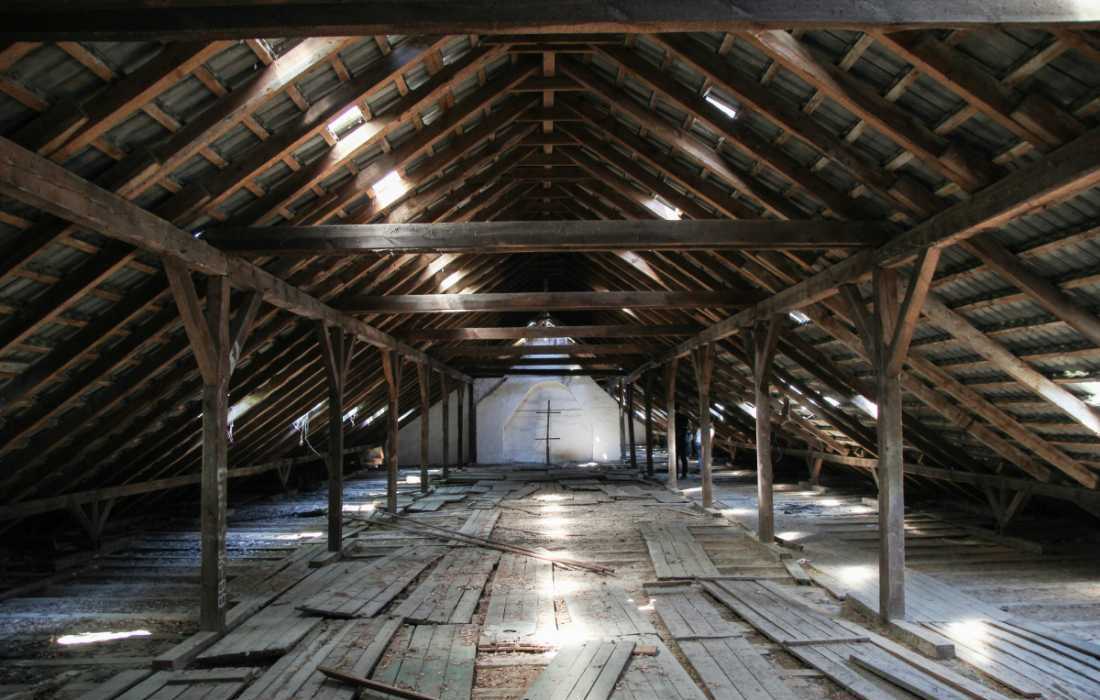
- Isolated in an attic.
- Left undisturbed.
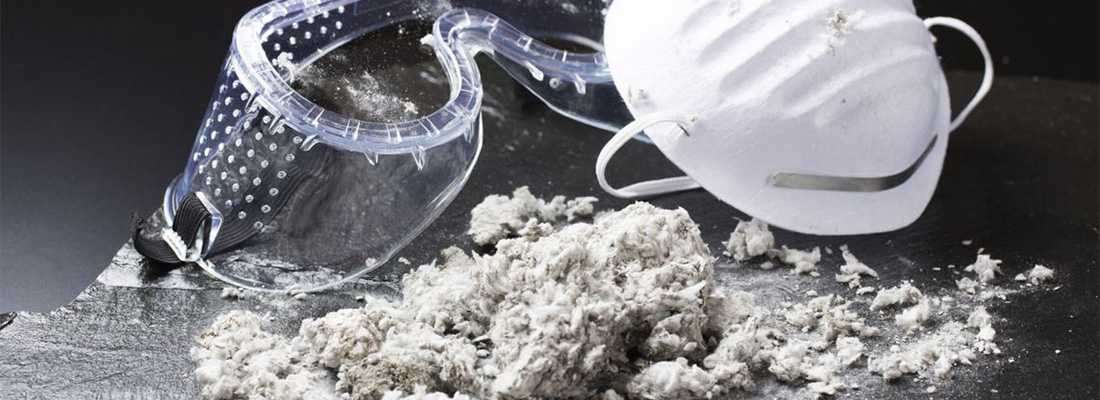
Asbestos becomes a health hazard when fibers are disturbed and released into the air. In other words, asbestos poses a risk only when fibers become airborne and are inhaled. Fibers may be released when asbestos‑containing materials deteriorate, or when they are cut, drilled, or otherwise disturbed.
The effects of damaged, airborne asbestos can be extremely harmful to health, including lung cancer among other diseases..
SHOULD ASBESTOS BE REMOVED FROM A BUILDING
Despite the commonly referenced 1% threshold used to determine whether asbestos analysis is required, it is important to understand that there is no rule requiring asbestos removal when the material is in good condition and not crumbling. Therefore, if the product is intact—even if the asbestos concentration is high—it is up to the owner or contractor to decide whether removal is necessary. If you are unsure of the material’s condition, it is always safer to have an expert assess the level of asbestos (low, medium, or high) rather than face consequences later.
Conversely, even if asbestos is present in small quantities, if the material is deteriorating or friable, removal becomes absolutely necessary.
IMPACT ON THE SALE PRICE OF A PROPERTY
What about the selling price of a home? If a property containing asbestos is listed for sale and the presence of asbestos is clearly disclosed, the selling price will vary depending on whether the potential buyer is comfortable purchasing a home with asbestos or is someone who refuses to take risks with their health and that of their family, and therefore requires asbestos removal as a condition of purchase.
COST OF ASBESTOS REMOVAL
An asbestos removal project typically costs between $5,000 and $30,000, depending on the size of the area and the level of asbestos present, although prices may vary from one contractor to another.
Since the Canadian government banned the installation of asbestos in December 2018 (quite late, in my opinion), it is important to understand that—given the cost of asbestos removal—decisions should be based primarily on the condition of the material.
When in doubt… always consult an expert.
The RBQ licence required to perform this type of work is the specialized contractor licence that includes subcategory 2.7.
OTHER ESSENTIAL PREREQUISITES FOR ASBESTOS REMOVAL IN QUÉBEC
(in addition to the RBQ licence)
Beyond the RBQ licence (category 15.9 – Decontamination), a contractor performing asbestos removal in Québec must comply with several additional regulatory obligations, mainly governed by the CNESST and the Act respecting occupational health and safety.
1. Mandatory CNESST‑approved training
Workers involved in asbestos removal must receive CNESST‑recognized training covering:
- Safe removal methods.
- Prevention of fiber dispersion.
- Use of respiratory protective equipment.
- Confinement and decontamination procedures.
2. Strict compliance with regulated work methods
Since April 2022, the CNESST has imposed mandatory procedures to reduce asbestos dust, including:
- Wetting materials.
- Ventilation and capture systems.
- Delimiting and confining work areas.
- Use of personal protective equipment.
- Decontamination procedures for workers and tools.
3. Register of asbestos‑containing materials
Employers must maintain a mandatory register of asbestos‑containing materials (ACMs) and keep inspection and analysis records. Québec considers any material containing 0.1% asbestos or more to be hazardous.
4. Additional permits and insurance
Depending on the project, the contractor must also plan for:
- Municipal permits required for decontamination work.
- Liability insurance adapted to hazardous materials work (often required).
- Sometimes pollution or environmental insurance, depending on the client.
5. Compliance with confinement and waste disposal rules
Work must comply with standards for:
- Airtight confinement.
- Management of contaminated zones.
- Disposal of waste at an authorized hazardous materials site.
6. Possible CNESST inspections and enforcement
The CNESST may:
- Stop work immediately.
- Impose penalties.
- Initiate legal proceedings in cases of non‑compliance.