


Understanding What This Subcategory Really Covers.
RBQ – SUBCATEGORY 6.1: WOOD FRAMING
Subcategory 6.1 – Wood Framing Contractor is one of the most misunderstood license classes in Quebec’s construction industry. Many specialized contractors mistakenly believe their license allows them to perform structural woodwork without limits. In reality, the RBQ clearly defines what can be done, what must be subcontracted, and which activities strictly require the 6.1 competency.
This blog aims to clarify what subcategory 6.1 actually authorizes, in which situations it is mandatory, and why it is essential for any contractor who works on a building’s structure—even partially.
SUBCATEGORY 6.1 can be obtained in two ways:
- By passing the RBQ competency verification exam for specialized contractors;
- Automatically, when a contractor qualifies for a general contractor license (1.2 or 1.3), since wood framing is part of the structural work covered under the general license.
However, even for general contractors, certain specific situations require adding subcategory 6.1 explicitly to the license. This is explained in the exceptions section.
WHAT IS ALLOWED UNDER SUBCATEGORY 6.1
Subcategory 6.1 covers all structural woodwork, whether it involves new construction, renovation, modification, or expansion. Below are the main authorized activities..
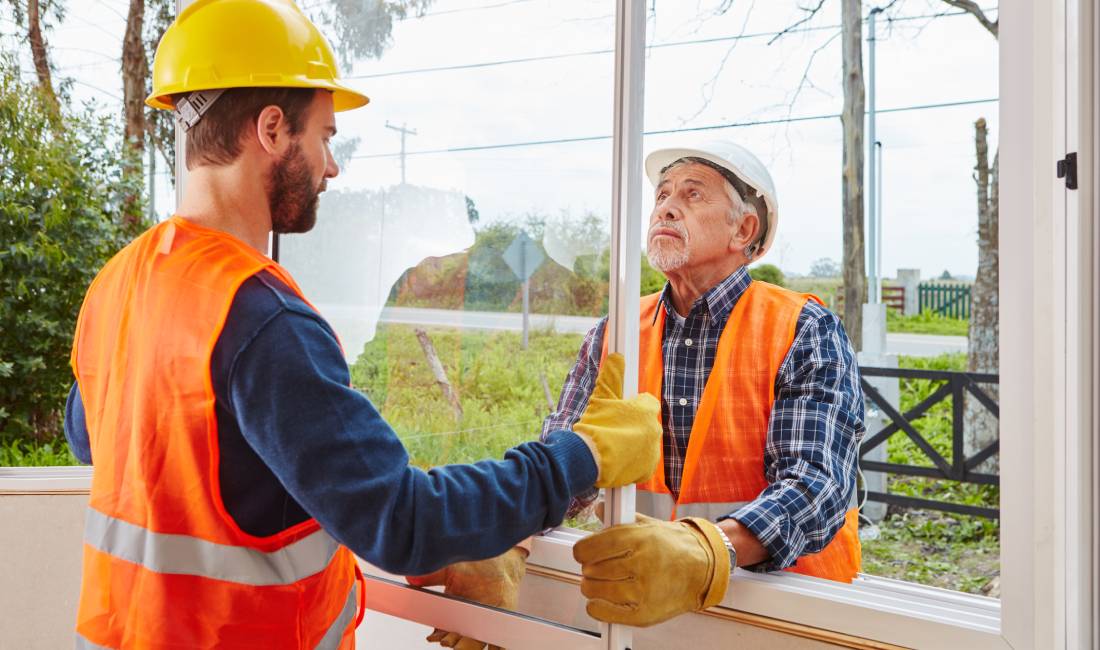
1️⃣ Installing Doors and Windows with Structural Modification
Door and window installation often create confusion. Here is the simple rule:
- If the size of the opening must be modified, even slightly, subcategory 6.1 is mandatory.
- If the opening remains the same size, subcategory 6.1 is not required, and a specialized door and window license (9.0) is sufficient.
Why? Because changing the opening size means touching the structure:
- Removing or adding studs;
- Modifying the header;
- Adjusting the top plate;
- Reinforcing vertical or lateral loads.
As soon as structural elements are affected, the RBQ requires the 6.1 competency.
2️⃣ Building Wood Balconies, Decks, and Patios
Constructing a balcony or deck in wood is a structural work. Therefore, subcategory 6.1 is required for:
- Structural design;
- Installing joists;
- Installing beams;
- Building integrated stairs;
- Attaching the structure to the existing building.
Next, depending on the type of foundation:
Balcony on Piles
- Subcategory 2.6 – Pile Foundations is required in addition to 6.1.
Balcony on a Concrete Slab
- Only subcategory 6.1 is required.
Balcony Entirely in Concrete
- Subcategory 6.1 is not required.
- A specialized concrete license (3.2) is required instead.
3️⃣ Building Wood Staircases (Interior or Exterior)
Constructing a complete wood staircase—including:
- The structure,
- Stringers,
- Risers,
- Treads,
- structural guardrails, requires subcategory 6.1.
Important nuance:
Repairing a Single Step or Non‑Structural Component
- Does not require subcategory 6.1.
- A specialized license is sufficient.
Metal Staircases
- Subcategory 5.1 – Metal Structures is required.
4️⃣ Building Garages, Sheds, Outbuildings, and Extensions
Any accessory building or expansion that includes a wood structure requires subcategory 6.1. This includes:
- Attached or detached garages;
- Sheds or storage buildings;
- Lateral or rear additions;
- Adding a floor or mezzanine;
- Building a pitched or flat wood roof.
Even small buildings require 6.1 if they include structural wood elements.
5️⃣ Any Structural Modification to a Building
This is the most critical point.
Subcategory 6.1 is required for any structural intervention, including:
- Installing a load‑bearing beam;
- Removing a load‑bearing wall;
- Modifying a floor structure;
- Reinforcing an existing frame;
- Replacing a beam or post;
- Modifying the roof structure;
- Adding a load‑bearing wall or support element.
Whenever an engineer must prepare plans or perform load calculations, subcategory 6.1 automatically becomes mandatory.
IMPORTANT EXCEPTION FOR GENERAL CONTRACTORS
There is one specific situation where a general contractor (1.2 or 1.3) must add subcategory 6.1 to their license.
Special Case : Building the Structure of a House for a Private Individual
If a general contractor is hired by a private individual to build the complete structure of the home the client will live in, the general license alone is not sufficient.
In this case, the contractor must:
- Pass the Subcategory 6.1 exam,
- Obtain the competency,
- Add subcategory 6.1 to their license.
Why does this exception exist? Because the RBQ considers the structural construction of a residence intended for the client’s own occupancy to be high-risk work requiring specific qualifications—even for general contractors.
Why subcategory 6.1 is so important?
Wood framing is at the core of most residential buildings in Quebec. A structural mistake can lead to:
- floor sagging;
- wall cracking;
- roof deformation;
- water infiltration;
- loss of load‑bearing capacity;
- safety risks for occupants.
The RBQ therefore requires contractors who work on structural components to be qualified, evaluated, and competent. Subcategory 6.1 ensures that the contractor:
- understands construction standards;
- masters vertical and lateral load principles;
- can interpret plans and specifications;
- knows the requirements of the Construction Code;
- can perform structural work safely.
⚠️ Take the training to add the subcategory
The training for this subcategory is offered in the individual training section. For more details, please visit our website.
Training: https://rbqcompetence.ca/en/trainings/
CONCLUSION
Subcategory 6.1 – Wood Framing is far more than a simple carpentry license. It is the essential competency for any contractor who works on a building’s structure—whether installing doors or windows with modified openings, building a balcony, constructing a staircase, adding an extension, or installing a load‑bearing beam. Too many contractors mistakenly believe their specialized license allows them to perform structural work. This blog clarifies the limits and obligations to prevent costly mistakes, non‑compliance, and RBQ sanctions.
In summary:
- If you touch the structure, you need 6.1.
- If you modify an opening, you need 6.1.
- If you build an accessory building, you need 6.1.
- If you are a general contractor building the structure of a home for a private client, you must add 6.1.
Understanding this subcategory protects your business, your clients, and the compliance of your work.