
Many people have questions about asbestos: What is it really? Is it hazardous to health? What should be done when it is present? What is the impact on the selling price of a home, and what are the costs associated with asbestos abatement?
Asbestos, Licences, and Abatement: The Complete Guide for Quebec in 2026
(Article was originally published in 2020 and updated to reflect current standards and regulatory requirements.)
In Quebec, there is no “permit” or licence other than that issued by the Régie du bâtiment du Québec (RBQ) to perform asbestos or mold removal.
However, to operate fully legally and compliantly, several mandatory training certifications, environmental authorizations, and strict regulatory requirements must accompany the RBQ licence.
Let’s review the technical and regulatory realities in Quebec for the customer and the contractor.
WHAT IS ASBESTOS
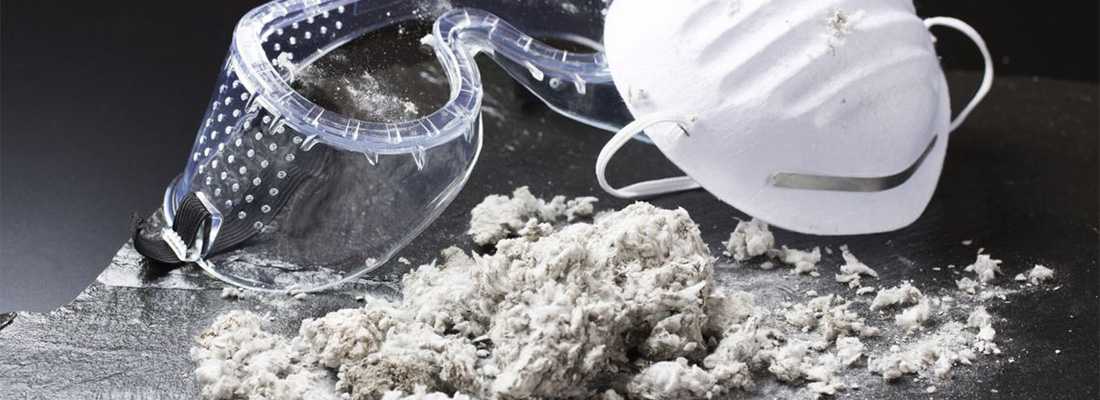
Asbestos is a generic term used to describe six different fibrous minerals that occur naturally in the environment. A “fiber” is defined as a particle measuring more than 5 micrometers ($\mu m$) in length with a length-to-width ratio of at least 3 to 1 (many Canadian legislative texts specify that an asbestos fiber must also be at least 3 $\mu m$ wide).
Due to its thermal insulation and fire-retardant properties, asbestos has been used in a wide range of manufactured products:
- Construction materials (roofing shingles, waterproofing materials, ceiling and floor tiles, paper and felt products, exterior siding, as well as asbestos-cement and plaster products).
- Friction materials (automotive clutch pedal covers, brake linings, protective pads and shoes, transmission parts).
- Thermal and flame-retardant protective clothing.
- Furnaces and industrial heating systems.
- Asbestos-based textiles.
- Thermal, electrical, and acoustic insulations or wrappings.
- Insulation for hot or cold areas.
- Packaging materials, gaskets, coatings, and sealants.
- Reinforcing elements in plastic products, thermosetting resins, and thermoplastics.
- Fillers in resins, plastics, and caulking products, as well as in road surfacing materials.
(Reminder: The installation of asbestos has been prohibited in Canada since December 2018).
Health risks: when should you be concerned?
There is no significant health risk when the material containing asbestos in your home or workplace is:
- Strongly bound within the original product and in good condition;
- Sealed behind walls and floors;
- Insulated in an attic;
- Left undisturbed.
Asbestos presents a danger when fibers are disturbed, deteriorate, or are cut, thereby becoming airborne and inhaled. The effects of damaged asbestos can be very harmful to health, notably causing lung cancer.
SHOULD ASBESTOS PRESENT IN A BUILDING BE REMOVED
Despite a maximum threshold of 1% set for performing an analysis when asbestos is suspected, no rule automatically mandates abatement if the product is in good condition and does not crumble. Therefore, if the product is intact, it is up to the owner or contractor to decide whether or not to have it removed. Naturally, if you are unsure of the product’s condition, it is better to have an expert evaluate the level of asbestos presence (low, medium, or high) rather than dealing with the consequences later.
Conversely, if asbestos is detected (even in small quantities) but the materials are crumbling and in poor condition, abatement is unquestionable and necessary.
IMPACT ON THE SALE PRICE OF A PROPERTY
What about the value of a home put up for sale? When an owner decides to sell a property where the presence of asbestos is known and clearly disclosed, the selling price may be influenced by buyer perception. Some buyers may have no objection to acquiring a property containing asbestos, while others—concerned with eliminating any potential risk to their health and that of their family—may require complete abatement as a condition of purchase. This reality can directly impact buyer interest, bargaining power, and, ultimately, the market value of the property.
COST OF ASBESTOS REMOVAL
You will certainly want to know that an asbestos abatement contract will generally cost between $5,000 and $30,000, depending on the surface area and the degree of asbestos presence, although prices may also vary depending on the contractor.
Since the Canadian government banned the installation of asbestos in December 2018, it is important to understand that—given the cost of asbestos removal—decisions should be based primarily on the condition of the material.
THE REGULATORY FRAMEWORK IN QUEBEC: BEYOND THE RBQ LICENSE
In Quebec, a licence from the Régie du bâtiment du Québec (RBQ) is the essential baseline for carrying out this work. The targeted specialized contractor subclass is generally 2.7 (or category 15.9 for decontamination).
However, holding the correct RBQ licence is not enough. To operate in full legality, several strict requirements apply:
1. Mandatory Training Compliant with the CNESST
- Workers and supervisors must hold specific attestations required by the CNESST.
- For asbestos: Mandatory training on safe work methods with asbestos (pursuant to section 3.23.7 of the Safety Code for Construction Work) is required for anyone handling or supervising the removal of asbestos-containing materials.
- For mold: Although there is no specific regulation for mold in the Safety Code, employers have a legal duty of diligence and must demonstrate that their employees have completed recognized specialized training (e.g., based on the Canadian Construction Association’s CCA 82 protocol or IICRC standards) to protect their health and that of the occupants.
- Since April 2022, the CNESST has imposed rigorous methods: humidification of materials, ventilation and capture systems, containment of work areas, wearing of PPE, and worker/tool decontamination procedures.
- Employers must maintain a register of asbestos-containing materials (ACM). In Quebec, any material containing 0.1% asbestos or more is considered hazardous.
2. Environmental Authorizations (MELCCFP)
- Contractors must ensure that asbestos waste is handled safely. Asbestos residues are residual hazardous materials. They must be transported securely and routed exclusively to an Authorized Residual Materials Landfill (LET), often accompanied by a tracking slip.
3. Municipal Permits and Characterization
- Renovation or demolition permits: Before starting major decontamination work (which often requires opening walls, removing drywall, or stripping insulation), a municipal construction or renovation permit is almost always required by the municipality where the work takes place.
- To obtain this permit, several municipalities now require proof that material characterization (asbestos testing) was carried out beforehand for buildings constructed before 1990.
4. Regulatory Notices to the CNESST
- Notice of work commencement to the CNESST: For large-scale asbestos projects involving high-risk levels (or major large-scale abatement projects according to CNESST regulatory thresholds), the contractor has a legal obligation to submit written notice to the CNESST at least 10 days before operations begin, detailing procedures, containment plans, and personal protective equipment used.
In case of doubt… always seek the advice of an expert!